
Addressing affordability, education, and environmental justice, Steyer fields questions from a crowd of nearly 200 Central Valley residents
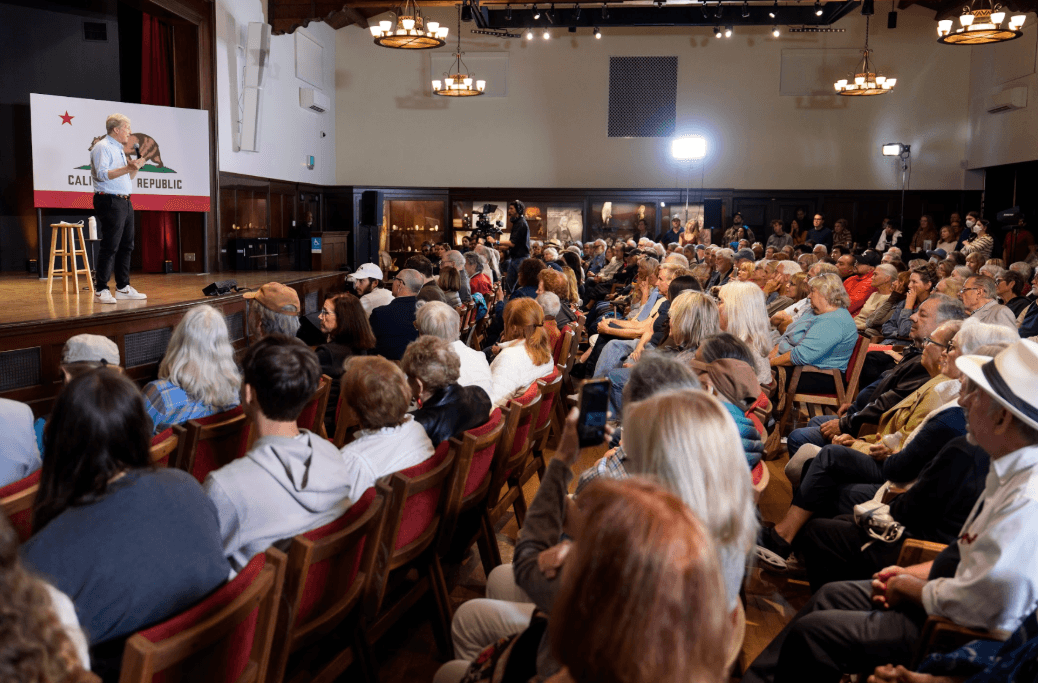
SANTA BARBARA — Last night, Tom Steyer brought his statewide "Shared Prosperity" town hall tour to the Santa Barbara Museum of Natural History, riding a wave of momentum that has seen him pick up major endorsements and emerge as the leader of a crowded field. With crowds of more than 400 people lining up down the block and spilling out onto the museum’s patio, Steyer was joined by activist and content creator Carlos Eduardo Espina and Assemblyman Gregg Hart, and answered questions about the issues dominating households across the state: the cost of living, climate change, and his plans to hold ICE accountable.
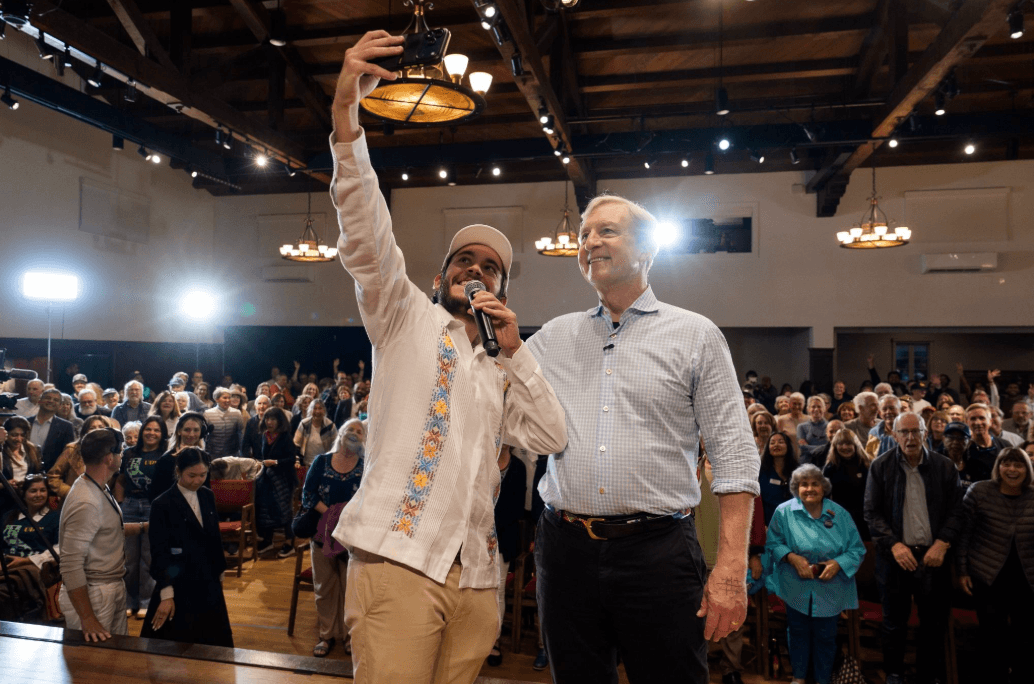
Carlos Eduardo Espina, who is a 27-year-old nonprofit director, activist, content creator, and the most-followed Latino activist in the United States, opened with remarks saying, “Tom is a guy who I really believe in, who I really trust, and who I think is in this for the right reasons… People want something different, an outsider. And I really do feel he can bring new ideas and new proposals to the table.” Earlier this week, Espina joined the Steyer campaign as a consultant and advisor, aiming to represent the Latino community and introduce his audience of more than 22 million followers to Steyer’s platform.
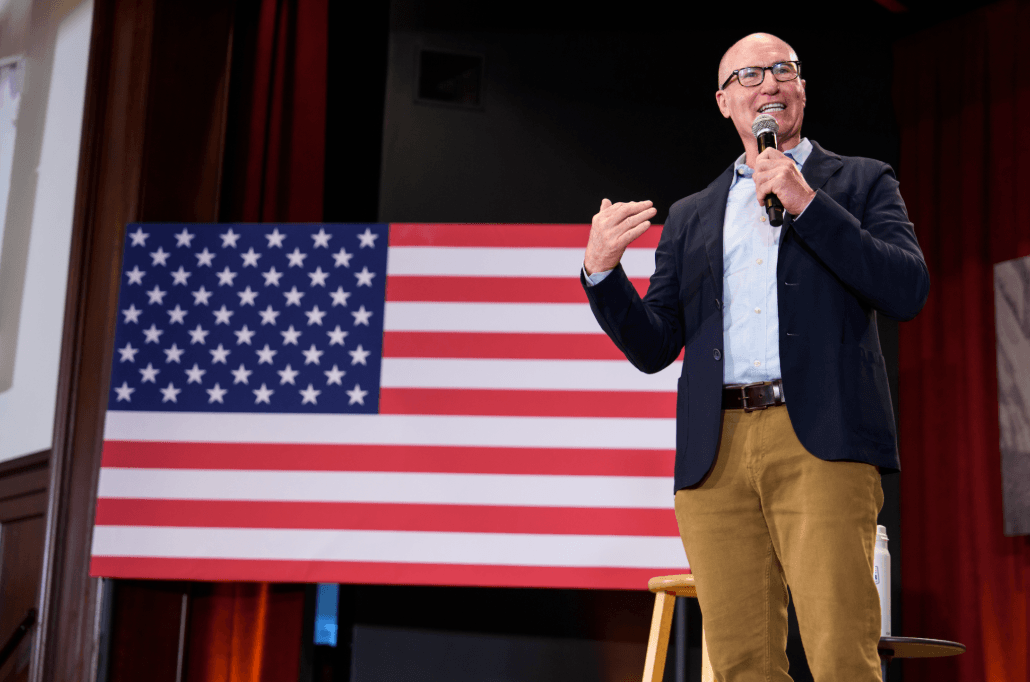
Assemblymember Gregg Hart followed Espina by recounting his many years of friendship and collaboration with Tom and emphasized his belief in Tom’s mission to share prosperity with all Californians. “The reason I'm supporting Tom so strongly and have been for a while,” Hart said, “is because he is not a politician that likes to talk. He's a politician that listens… he wants to understand what's really going on in [peoples’] lives, and to translate that into policy that makes change.” He ended his speech by saying, “Tom Steyer is on fire.”
Steyer on his new plan to prosecute ICE:
“One thing we're going to do is make racial profiling illegal and prosecute people who do racial profiling. We can prosecute people who commit violence against Californians and the people who send them to do it — not just the agents, but the people who send them to it. We can do that. We can do investigations of detention centers to make sure they're not trying to hide this stuff within California, we can do investigations and see what's going on behind closed doors. We can have a state-funded Legal Defense Fund for the kidnapped people or people under threat of deportation, because within this system, if you have legal representation, the outcomes are completely different…”
On why he supports taxing billionaires:
“This system runs on working people, by those people. So if you come here and say it's all mine, it's all me, and I'm gonna rip off the system and rip off 1000 years of people's sacrifice. No way. I'm perfectly happy to have people change the world, you know, and do amazing stuff and be rich. They have to be good members of this community and pay their taxes…”
On the urgency of single-payer health care:
“If health care is a right and we're going to provide quality health care to every Californian, we need to break the structure. We need to bring down the cost, not just for health care, but so that we can do home care, so we can do education again in a really good way, so we can free up our budget. So that's why those people are mad at me. But let me tell you, as Californians, we have to do it, and there's not a choice. It's not because I have some philosophy here. It's because I looked at the numbers and I was like, we're going to provide health care. Let's provide health care and do it the way we can…”
On his regional approach to address the housing crisis:
"I'm aware that one size in a state this big does not fit all. This is what is it? 58 counties, 40 million people…. I know every place is different, but what I think is this: every place is going to have to build, and you're going to have to figure out how we are going to do it…But the idea that not building is a victimless plan, that nobody's hurt is not true. People are suffering because of the high rents and the cost of housing to buy and the California Dream.”
On AI’s impact on our future workforce:
“Nobody else running for governor — if you can't believe it — has a policy about artificial intelligence. That is nuts… What we have is about protecting working people, and to try as much as possible to say artificial intelligence is a tool for workers, not a replacement of workers… There is a real need for government, in conjunction with businesses, and in conjunction with our community colleges, to do a real effort to direct people to real jobs and to make sure that those jobs are getting well paid.”
On his plan to address climate change as the next governor of California:
“I've worked on [climate] for at least 20 years…. Here's my plan, and it's pretty simple: Number one is, make the polluters pay… the number two thing is, environmental justice has got to be part of every plan, and people from those communities have to be leaders in devising those plans to make sure that we directly address what has been structural racism, racism in our society forever. Three is, and I don't know if you guys know this, but clean is much, much, much cheaper. We have a problem about paying the bills at the end of the month. Why are we paying for $8 gas, or probably $7 gas, to be realistic?... The fourth thing is we need to have a huge sequestration program. It's going to be a huge industry. It's going to be focused here. It's going to provide a lot of jobs, going to make big companies, and we're going to do it and save the world at the same time.”
###